
For junior Aiden Buehler, service isn’t something to put on a resume, a chore to get hours done or even something to just fill the afternoon–it’s about showing up and making a true difference in a person’s life.
Buehler is part of PMHS’ Interact Club and has used his platform this year to revolutionize the club’s impact. It all started with a phone call with Interact Club’s president, junior Bryan Nguyen, to talk about upcoming goals for the school year. “Tutoring came up because a lot of us on the board are academically inclined. I think it’s something we felt we should do because of the fortunate position we are in…you can’t control your own life, but you can help the luck of others,” Buehler said.
Buehler personally reached out to principals and other administrators across the district asking for ways to help. “I got a few bites and that’s that,” Buehler said. Now, Interact Club tutors across both elementary schools and middle schools in the district for a total of twenty eight different tutoring school sites. The club tutors all subjects, but mostly focuses on math due to its extreme deficiency. “When we first started, we were told 40% of the kids were failing math. And that says a lot about how a lot of kids are passing math classes but aren’t really understanding the content,” Buehler said. For Buehler, this offered academic assistance has become such an integral part of his daily routine that he helps to tutor four out of five of the school weekdays.
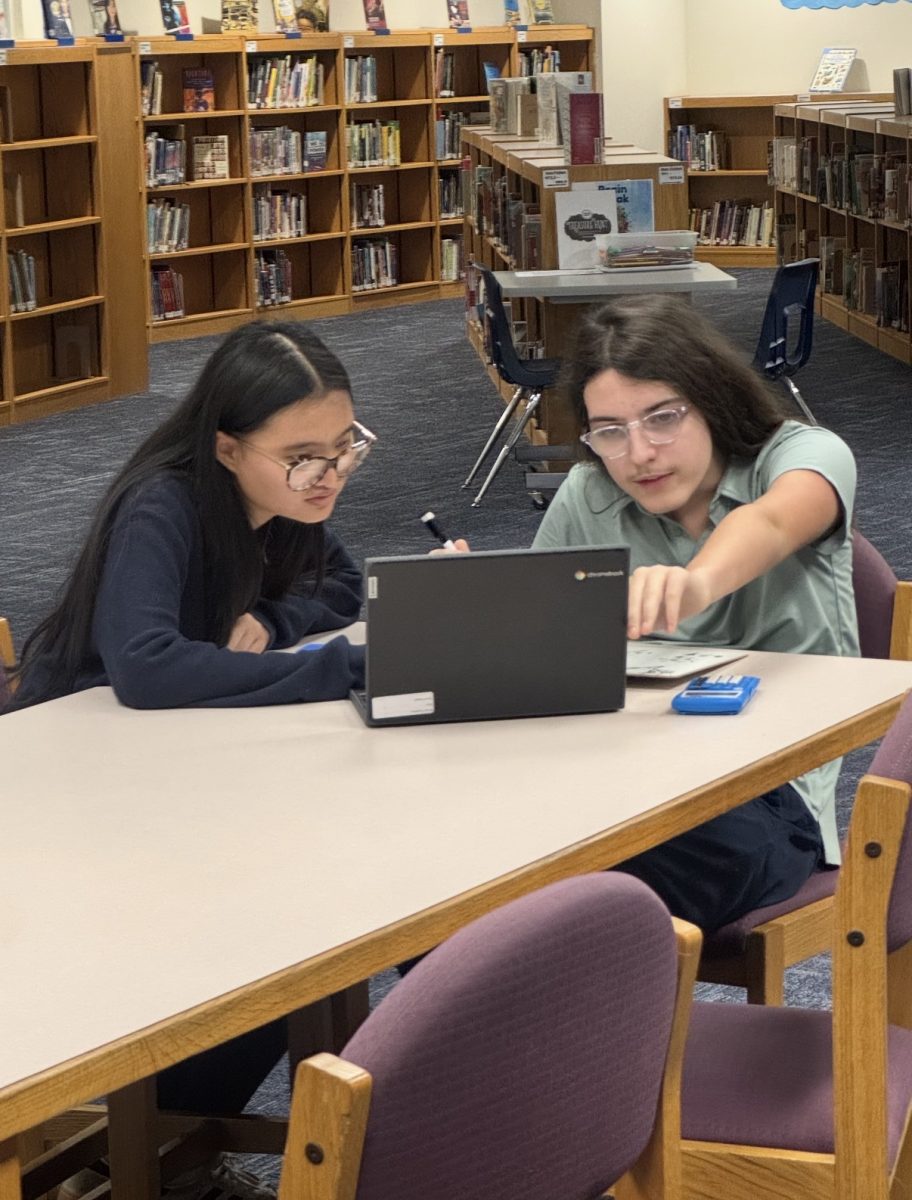
At the beginning of their tutoring journey the club focused on helping students catch up on missing assignments. This sentiment quickly changed when Buehler realized the issue was much deeper than that. “It was like beating a dead horse because you can’t teach kids to do their missing assignments when they can’t multiply. So we just started this in Southport where we’ve been teaching the concepts that they are behind on in groups,” Buehler said.
However, Buehler has realized that teaching these students cannot be done with the traditional approaches. Education, he believes, may need to change their approach in reaching students who aren’t as invested. “These kids are the first ones that are really growing up in a world where algorithms are really catered to them, and it’s that constant feed of dopamine that’s eating them. You can’t fight that, you have to work with it,” Buehler said. This realization prompted Buehler to take a new approach: gamifying education in an interactive and stimulated way. “You have to do jeopardies and explanations in between. You can’t do it the traditional way. You might be able to for some students, but not the ones that we are working with,” Bueheler said.
For Buehler working with these students has also served as a bit of a culture shock. “They don’t know what eight times eight is when I ask them. And they’re in seventh and eighth grade,” Buehler said. Buehler argues that a lot of these issues stem from a new generation and digital gap between learners and even parents. “In my childhood when I went home I would find my dad reading the newspaper…now kids see their parents on their phones which makes that the norm,” Buehler said.
Buehler further explains that the support that these students need are not being internalized by many educational leaders because they don’t have a touch point to the real root of the problem. Buehler was talking with a staff member at PMMS, “I basically had to tell him ‘Hey, they don’t understand the basic principles, amping up more work won’t help.’” These students need a different approach in their education. “They need education to be gamified, and they need more interventionist support,” Buehler said.
Working with these students has helped Buehler to gain a new perspective on the education process. Buehler suggests a needed shift in traditional tutoring in regards to fostering true student comprehension of content. What started out as a new club activity has transformed into a defining high school experience.