
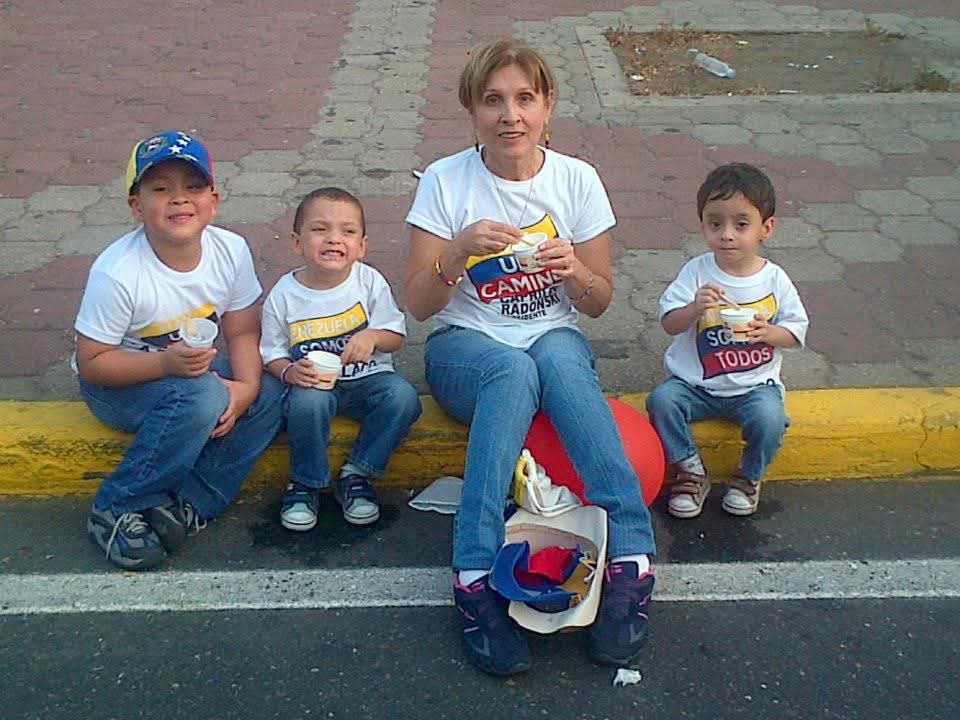
In the weeks following the reported capture of former Venezuelan president Nicolás Maduro, the future of Venezuela has been a topic of conversation that has stretched far beyond the country borders. It has entered into the everyday lives of millions of Venezuelans living thousands of miles from home.
While most headlines have focused on power shifts and foreign policy, members of the Venezuelan community here in Indianapolis are navigating something more personal: what it means to build a sense of home while carrying the weight of uncertainty for the country they had to leave behind.
For junior Jesus Silva Acuna that sense of home has been shaped less by geography and more by the people around him. Moving to Indiana was uncertain for Acuna but “having relatives from [his] mom’s side also living here in Indianapolis made this once-new experience much easier,” he said. “It brings a sense of familiarity in such a new world.”
That familiarity helped replace some of what was lost when much of his extended family became scattered across Venezuela and other parts of the Americas. Even as he has found welcome and belonging in his school community, the separation from loved ones remains a constant ache. “I miss the rest of my family who are still in Venezuela or scattered across the Americas, reminding me of the times we were together,” he said.
Unlike larger Venezuelan hubs like those in Florida, Indianapolis has a relatively small Venezuelan population. That lack has made cultural connection harder to find–but also more meaningful when it does appear.“It is hard to find people who can understand our situation,” Acuna said. “So we have found refuge in each other by staying together no matter what happens.”
That refuge is built through small, everyday acts of preservation. Sharing meals, speaking Spanish, telling stories of home and, when possible, seeking out pieces of Venezuelan culture in the city.
He recalls hearing about a local restaurant that serves arepas, a staple of Venezuelan cuisine. “I was told that there is a Venezuelan restaurant that sells arepas and other Venezuelan food,” he said. “My math teacher told me the food was great.”
Moments like finding a familiar dish in an unfamiliar place have helped keep cultural identity alive. They also offer a quiet reminder that even a small diaspora can leave a mark .
The recent political developments have caused a cautious optimism within the tight-knit circle. For many Venezuelans abroad, change in leadership represents both a new possibility as well as risk.“Maduro’s capture is a really big step for Venezuela and its people, outside and inside,” Silva Acuna said. “However, there is really no telling how Venezuela may be in the future at the moment.”
That uncertainty tempers celebration. Years of economic collapse, political turmoil and migration have taught many Venezuelans to be careful with their hope that still persists. “I remain hopeful for my country, wishing for a better future after decades of suffering,” he said.
For Venezuelans in Indiana, the future of their homeland is deeply personal, even from afar. Yet their daily reality is here: classrooms, neighborhoods and family gatherings where they piece together belonging. In the absence of a large, visible community, comfort has come from closeness rather than numbers. Relatives lean on relatives. Friends become extended family. Shared memories bridge the distance between Indianapolis and Caracas.
As global debate continues over power, intervention and sovereignty, the Venezuelan community here is focused on something quieter but just as powerful; they hold each other steady through uncertain times, they keep the culture alive and reach to connect, making any place feel like home.