

When I was a kid, video games were a luxury. The main attraction was the grand outdoors—classic yard games, sidewalk chalk, jumprope, cops and robbers—the good stuff. Any video games I indulged in were the ones provided by the tank-like JVL Conquest I-Touch7 gaming computer, where my name proudly filled the scoreboard of the “Hoop Fever” basketball game.
Life then seemed promising: after-school arts and crafts, a game of “HORSE” and “Popcorn” on the trampoline where my neighbors and brother would see how high they could launch me with the force of their pencil-thin legs. Hopscotch in the summer and spring, jumping into leaf piles in the fall (sometimes pumpkin carving too), sledding at the Winding River Golf Course in the winter–those were the times when playing was active. When playing meant getting your hands dirty and building tiny homes for the worms that crowd the yard after a long, rainy spring day.
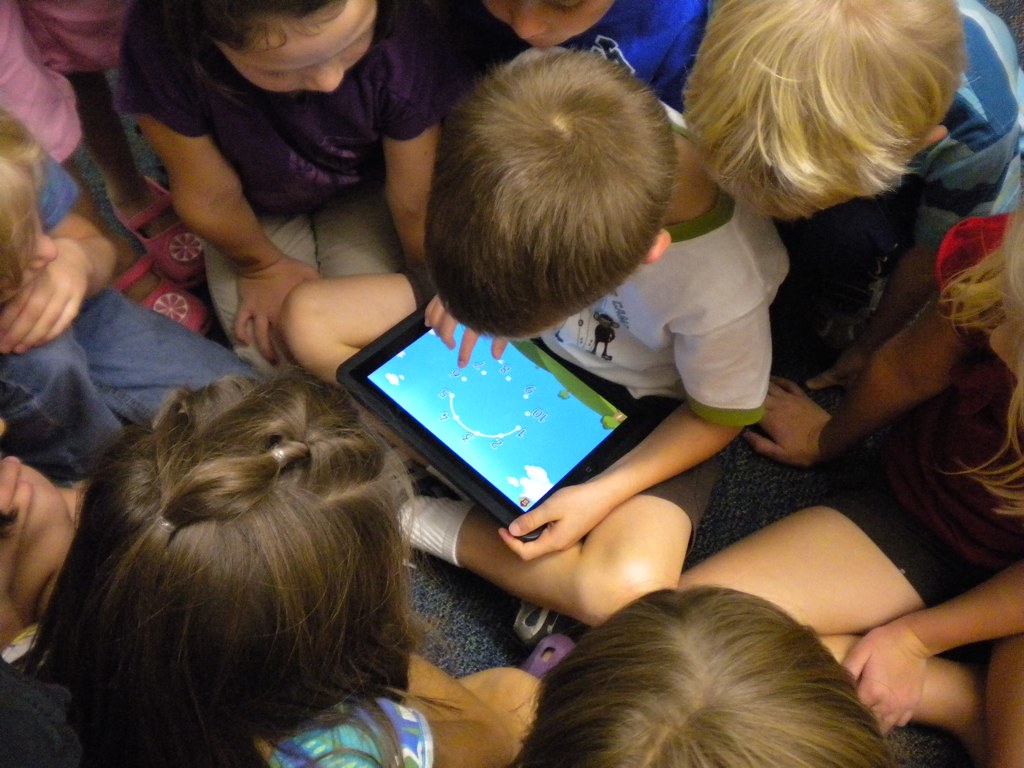
Playing in the modern age, however, translates to whatever the newest Apple product is—whatever major corporate pill they decide to prescribe to the iPad Generation–otherwise known as “Gen. Alpha”. Creativity is slowly replaced by AI generated distractions, draining the color from any vibrant imaginations and replacing it with the neon glow of a screen. Children grow bored of the hands-on, out-and-about routine. Now it’s all about ‘that damn phone’.
Five-year-olds, sometimes even younger, walk around with iPads and iPhones as if they have business calls to return. Nothing seems to entertain them the same way. Nothing competes with an AI-curated Instagram reel of some dog bouncing on a trampoline.
When I pass by the park now, it feels less like a place and more like a memory. I remember it crowded, loud in the most human way—swings shrieking against their chairs, sneakers scuffing mulch, the fragile democracy of children deciding who was “it” during an intense game of tag. Every visit offered a new friend, a fleeting alliance formed over nothing more than proximity and imagination. You barely learned their last name. You never saw them again. Yet they lived on in you, proof that connection did not need permanence to matter.
Now the park sits in a kind of suspended stillness. The structures remain, but the spirit feels evacuated. It makes me wonder whether we have traded shared space for curated space, traded spontaneous companionship for digital proximity. When childhood unfolds primarily behind glass screens, what happens to the small, unrepeatable encounters that once shaped us? The ones that existed only because we were physically there, breathing the same air, willing to be briefly known and then let go?
And maybe the real loss is not the absence of park-pedestrians or backyard games, but the absence of resistance itself. Childhood once required friction. You had to negotiate the rules, endure the boredom, invent the world before you could handle it. Imagination was not handed to you pre-rendered and glowing. It was built from dirt under your nails and the slow passing of an afternoon. Now the world arrives finished. Filtered. Algorithmically predicted before a child even knows what they want. There is something unsettling about a generation that never has to wait—that never has to wonder. When every question is answered instantly and every silence is filled, what happens to the mind that once learned to stretch itself in the quiet?
Children used to engage. They used to be present in the sacred ordinaries of a moment–absorbing language not from a screen but from the mouths of their cousins and uncles, studying the rise and fall of real voices, the architecture of real expressions. They learned by witnessing. By lingering. Now many of them exist in curated realities funded by Google and Paramount, landscapes designed to hold attention rather than deepen it. A device rests in their palms like an extension of the self. Even solitude is accompanied by a screen.
Grandparents rarely initiate stories. Parents seldom linger at the dinner table. The meal ends not with conversation but with migration–to the couch, to the television, to separate glowing corners of the same house. The table, once a site of communion, becomes a temporary station between digital destinations.
I miss reality.
And I will admit, I am not exempt. I find myself doom scrolling—surrendering hours to a current that never asks me to swim, only to float. What was once divided into generations—Baby Boomers, Gen X, Millennials, Gen Z and Gen Alpha—now feels flattened into something singular. The iPad Generation. Not defined by age, but by posture. Head bent. Thumb moving. Eyes lit blue.
Grandma taps the casino games. Mom scrolls through Facebook. Sons and daughters drift through social media while younger siblings bathe to the glow of a television humming in the next room. The light is constant. It transfers from hand to hand like inheritance.
When will it be enough? Or is “enough” a concept incompatible with infinite scroll? Will we ever exhaust the appetite for simulation, or will we continue feeding the machine that feeds us back an edited version of ourselves?
It does, in the end, return to choice.
Technology is not a tyrant. It is a mirror. And what it reflects is our willingness to be distracted from one another. We cannot reclaim every park, every trampoline, every fleeting childhood friend. But we can reclaim presence. We can decide that eye contact matters. That silence is not emptiness. That connection should require breath and risk vulnerability.
We can choose to resolve what was never meant to be replaced:
Real. Raw. Passionate. Humanity.












Grandma Jones • Mar 13, 2026 at 8:02 AM
Fabulus artickel.
– Sent from my iPad