
When you step into your grandparents’ home, you might notice photographs of them together—resting on the mantel, pinned to the wall or carefully sealed in a frame. Maybe there is even a scrapbook tucked away, its pages worn from years of revisiting. When you ask them to share their story, they speak for a long while, drifting through memories until it feels as though the telling might never end.
“We met somewhere in band, I think it might’ve been marching band. After a while of talking, [we found] that we both liked the same things and we were both in the same activities so it made it easier to connect—and I thought he was cute,” senior Rai Sai said.
“Me and Mr. Bird met at a pre-college meetup […] we ended up in the same core group, which is seemingly impossible at a large college with several thousand people. We saw each other multiple days a week and talked a lot over Thanksgiving and Christmas breaks,” Izabella Bird, PMHS geography teacher said.
“Church, we were at the same Sunday school class,” PMHS mathematics teacher, Amiee Hollander said; “and we had a college class together and that’s when we kinda started datin’,” PMHS mathematics teacher Gabriel Hollander added.
Across generations—grandparents, young couples just beginning and teenagers imagining the future—each relationship carries its own rhythms: quiet routines, bursts of laughter, small acts of care and moments that linger longer than expected. The details shift with age, but the traces of devotion remain: a hand held in passing, a note tucked into a drawer, a story told and retold until it becomes part of everyone who hears it.
Love—which is, truly, all around us.
In school hallways, on park benches and walkways, in churches, restaurants, movie theaters, cities and even grocery stores—you will find two strangers hand in hand. I have seen younger couples, older couples and teenagers, all drawn together by attraction, yet each differs in how that connection is expressed.
Flip through familial photo albums, strike up conversations with elders or talk with your younger aunts and uncles—you will uncover stories of togetherness, exchanges of perspective and reflections on what love looks like in the modern age.
I am aware that many younger readers—especially as males make up nearly 52 percent of the student body—might be skeptical of a lovey-dovey column on relationships, particularly when discovering real love at a young age feels so elusive. But while it may be rare, it is far from impossible.
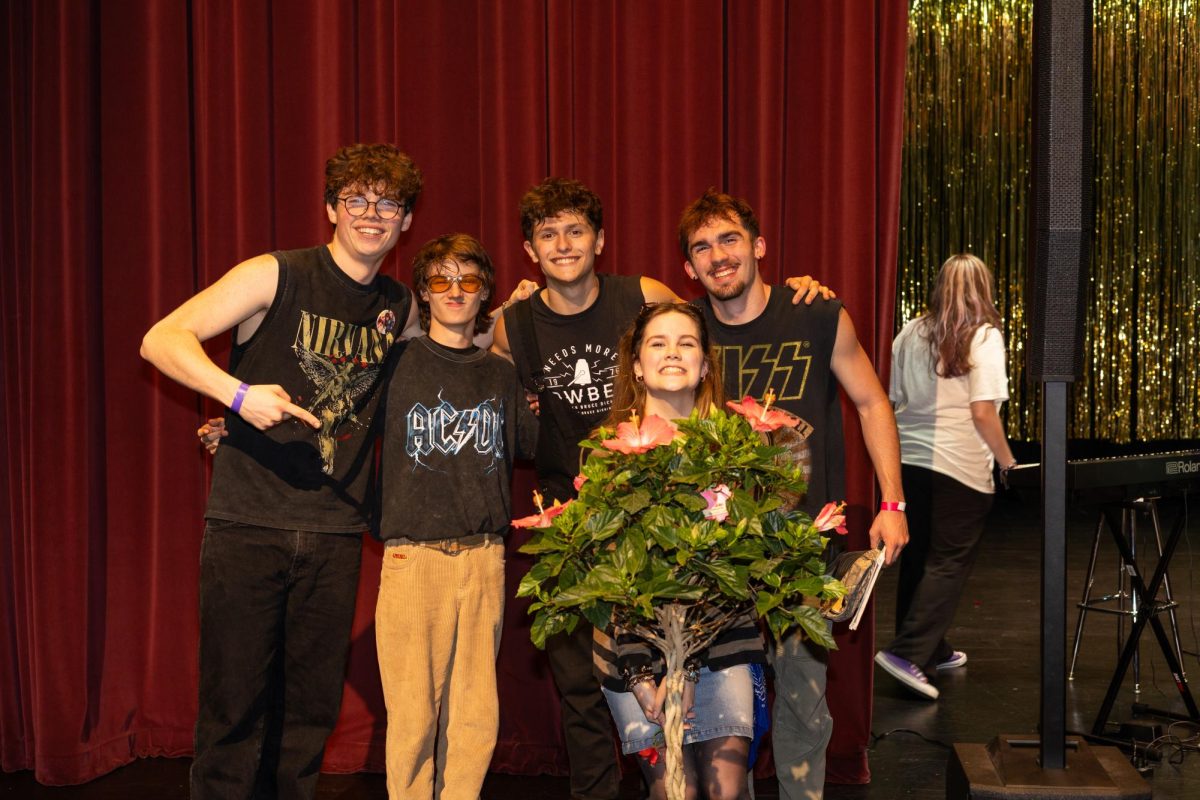
Koy Koening and Rai Sai are a high school couple whose relationship carries a quiet determination. When asked what a relationship means to them, Sai said: “Two imperfect people choosing to not give up on each other, good or bad days.” Their bond is built on trust and open communication, essential tools for navigating misunderstandings, conflicts and the challenges of teenage life. They reflect, talk things out and honor each other’s boundaries, understanding that even young love requires patience and care.
They also see relationships differently from past generations. Where Sai’s parents were bound by intrafaith obligation, Koenig and Sai value choice, vulnerability and small gestures that keep the spark alive. “Sometimes people say it’s just high school and it won’t work out,” they admit, “but building life together is a journey, a significant one.” Their story shows that love, even in its earliest stages, can be real, patient and persistent—growing quietly, one moment at a time.
While their love is still new, it is already seen, measured and reflected upon by those who have walked the path a bit longer.
Mr. Bird and Mrs. Bird met in college, their connection sparking in lecture halls, late-night study sessions and the quiet corners of campus life. Their relationship grew steadily, rooted in shared experiences, honest communication and small acts of care—especially during moments when love felt less like a feeling and more like a choice. As Mr. Bird explained, “Everyone thinks love is a feeling when it’s just not,” emphasizing that commitment is what gives love meaning beyond convenience. Noting that relationships deepen when couples “go through things to come out stronger,” and that love grows through effort, resilience and mutual respect—qualities she admires in her grandparents’ marriage.
Despite outside judgments and questions about knowing “too soon,” the couple trusted their shared values and moral framework, believing there was no reason to delay a commitment they already understood. Their marriage reflects the idea that love is not transactional, but sustained through communication, accountability and the willingness to show up even when effort feels uneven. For high schoolers navigating first crushes and early relationships, their story serves as a reminder that love doesn’t have to be perfect—or even fully understood—to be meaningful. It can begin early, in small and intentional ways and grow into something lasting when nurtured with patience, work and care.
Mr. and Mrs. Hollander met in their late teens, their relationship beginning through conversations in college classrooms and Sunday school before leading to marriage in their early twenties. Reflecting on that transition, Mrs. Hollander described marriage as “another ballgame,” grounded in “commitment” and entered with the understanding that it is “a lifelong thing.”
From their perspective, modern relationships appear increasingly casual. “Relationships are more casual than they used to be,” Mrs. Hollander said, noting that expectations today are often shaped by media portrayals that suggest relationships should be effortless. “Sometimes you see things online or in a movie and it looks like it’s always perfect, but it’s not—you have to put in time and effort,” she said.
Mr. Hollander echoed those concerns, observing that “the way people view it has changed,” particularly in a society “so inundated with social media.” He questioned how those influences shape young people’s understanding of commitment. “Maybe we would be better off if we went back to it being a more serious and important thing,” he said.
For the Hollanders, the foundation of a lasting relationship lies not in perfection but in shared values and consistency, shaped over time through everyday moments rather than idealized expectations, a recurring obstacle in younger relationships.
While relationships may evolve across generations, age has a way of clarifying what truly endures. Beneath changing expectations, social media influence and modern interpretations of love, the foundation remains unchanged. When viewed through an aged lens, love is no longer defined by feeling, but by what sustains it over time:
“Support, commitment and dedication,” Amiee Hollander said.