
On February 1, 2026, the Grammy Awards in Los Angeles opened a space for artists to speak out amid Immigration and Customs Enforcement (ICE) chaos. Bad Bunny stood on stage, thanking God while also protesting with the phrase “ICE out” before exiting to a rapture of applause. He added, “We’re not savage, we’re not animals, we’re not aliens. We are humans and we are Americans,” as his final statement.
The Grammy Awards have long been a night defined by glamour, celebration, and carefully curated performances—not public dissent. This year, however, the ceremony broke from tradition as artists used one of music’s most prestigious stages to protest, transforming an event usually centered on accolades into a platform for political expression. What unfolded was an uncommon moment in Grammy history, one that signaled a growing willingness among artists to challenge the status quo in spaces that have historically avoided controversy.
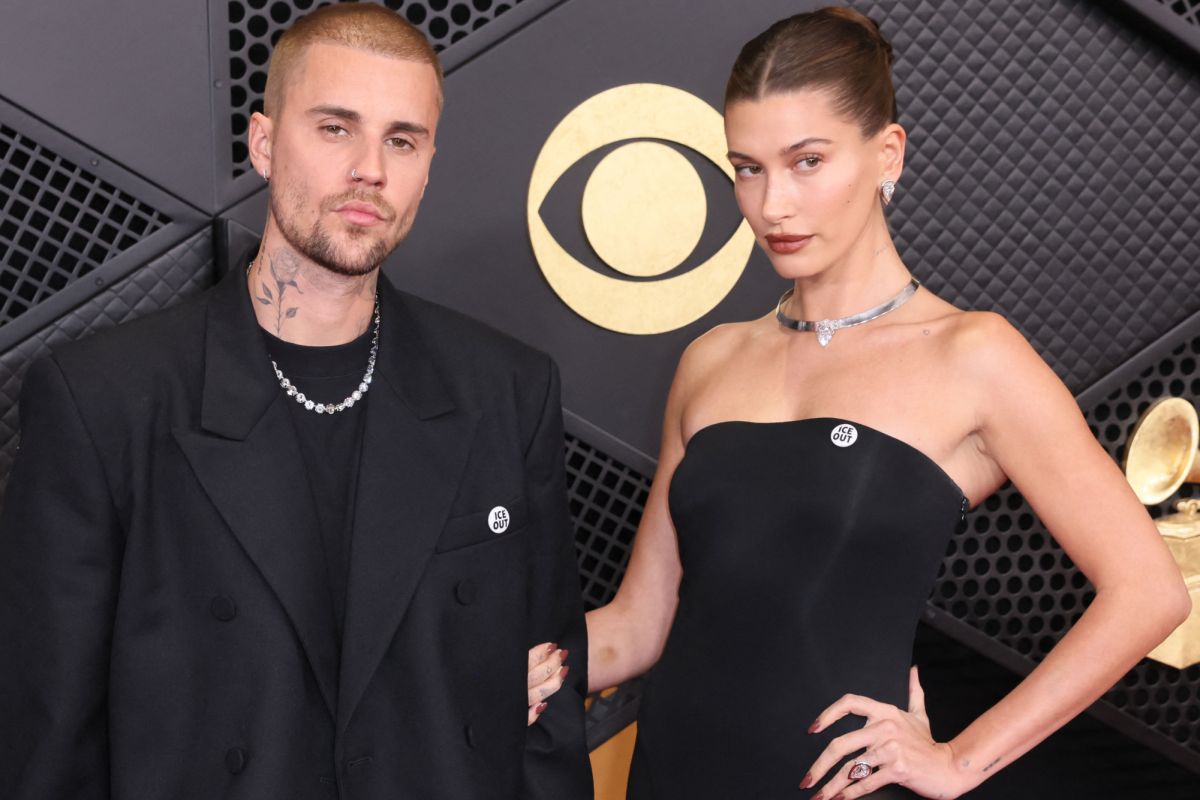
Many artists walked the carpet wearing “ICE OUT” pins, joining the growing cultural revolt against immigration brutality. Justin and Hailey Bieber, both notoriously neutral celebrities, were spotted wearing the same statement pins on their jackets. Alongside them, Billie Eilish, Finneas and Carole King posed with the pins clearly visible against their black attire.
Eilish began her speech for Song of the Year and closed with the statement: “No one is illegal on stolen land.” Olivia Dean also shared her family’s connection to immigration, stating that immigrants “deserve to be celebrated.” Adding, “It’s really difficult to be here and to be celebrating something so joyous and beautiful and positive when we know what’s happening on the streets,” she said.
“These pins are about so much more than a red carpet moment. It’s about people taking a stand and doing what they can to show up and say that ICE should be out of our communities,” said Maremoto Executive Director Jess Morales Rocketto. While their higher profiles engendered public protest, many artists used their platforms to stand with those who have been killed by ICE.
“The real work is done by observers on the ground in Minneapolis. We just want to shout them out,” Justin Vernon said. The fatal shootings of Alex Pretti and Renee Good have impacted American citizens nationwide, prompting televised messages from artists expressing grief and solidarity as the movement continues to grow.
SZA, who won two of the five Grammys for which she was nominated, used the stage as a spotlight on civilian harm caused by ICE. “There’s been world wars and plagues, and we have gone on. We can go on. We need each other, we need to trust each other and trust ourselves,” she said.
Among many various artists from pop to heavy metal and alternative, one folk artist Jesse Welles, deemed the “modern-age Bob Dylan,” by many fans, was nominated for four awards including: Best Folk Album for Under the Powerlines, Best Americana Album for Middle, Best Americana Roots Song for “Middle” and best Americana Performance for “Horses.” While among the many protestors on the carpet, Welles released music directly critiquing ICE.
The lyrics of his song “Join Ice” heavily criticized the agency’s tactics, mentioning “putting folks in cages,” tearing families apart and the targeting of working-class immigrants. This includes various singles like “No Kings,” “Masks Off” and “Good vs. Ice,” which criticize the political state of America.
“Our own government has raised an army of masked anonymous men to attack its own people, and that feels utterly irresponsible for us to be celebrating anything right now,” lead vocalist of the band OK Go, Damian Kulash said.
“[…] we need to keep fighting, speaking up and protesting. Our voices really do matter, and the people matter,” said Eilish.