
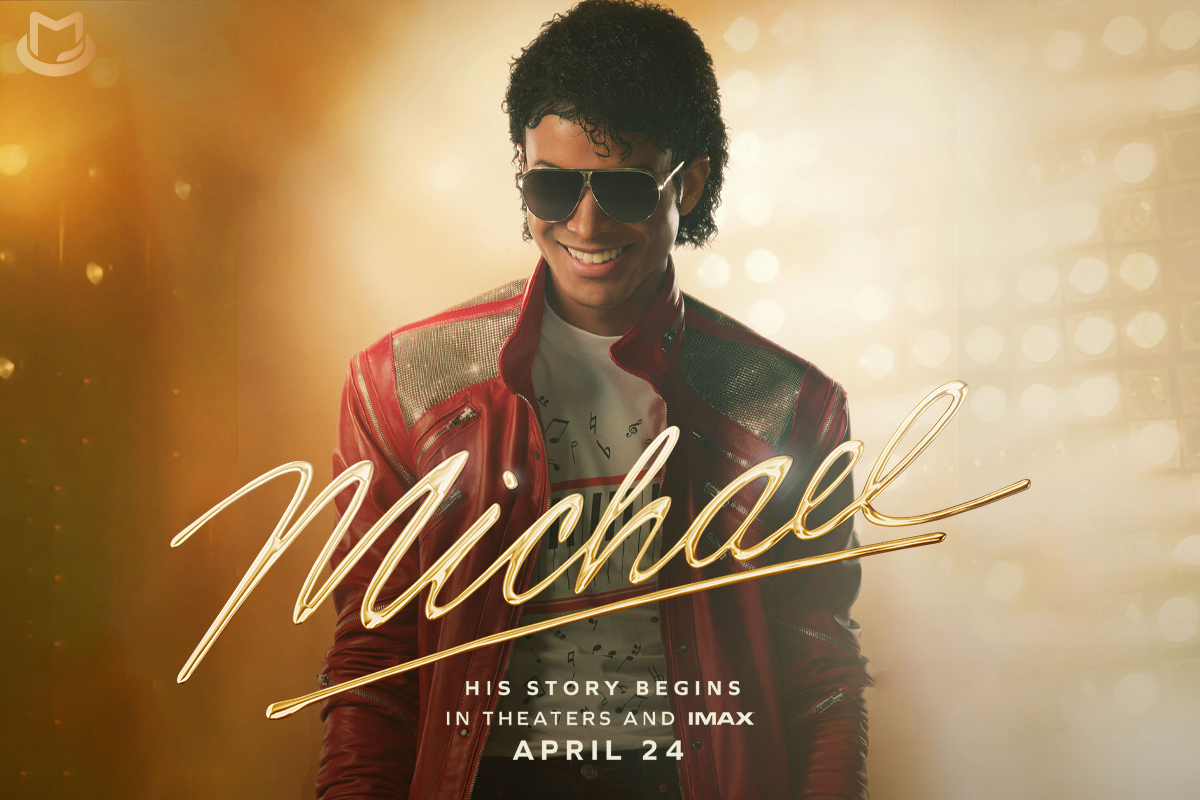
The long road to bringing “Michael,” the 2026 biopic centered on the King of Pop Michael Jackson, to the screen has been marked by anticipation, controversy and impossible expectations. From devoted fans eager to see his artistry honored to critics wary of how the film approaches his legacy, opinions on the project differ greatly. Yet, regardless of where audiences stand, the film’s very existence raises a larger question: can any biopic truly capture a figure as influential, scrutinized and mythologized as Jackson?
Michael’s nephew, Jaafar Jackson, held the title role starring as Michael in the film, with fans complimenting his performance: “Jaafar Jackson Oscar incoming” said Letterboxd user maya. Box office tickets reached an all-time record, grossing $577 million globally in three weeks according to BoxOfficeMojo with North America holding 58.2% of its total from international markets.
With public opinions ranging from admiration to disdain, “Michael” fans enjoyed the entertainment while critics were searching for accuracy. The film initially caught negative reviews from critics with them describing the movie as “feeling superficial,” and “a hokey, corny, safe, clichéd, sanitized look at Michael Jackson,” critic for LAist Christy Lemire said. Many have referred to the 2018 film “Bohemian Rhapsody” centered on the 1980s rock band Queen, which received negative feedback by critics due to it “painting the band in an unrealistically favorable light.” One similar aspect of the two films is that the subjects were highly involved in the production process. In “Bohemian Rhapsody,” Queen members Brian May and Roger Taylor were heavily involved. Similarly, 5 of Michael Jackson’s siblings and his son Prince Jackson were all executive producers on “Michael.”
The foundation of many of the film’s problems fall back on a mysticism that surrounds Jackson rather than portraying a historically accurate story about one of the most famous figures in human history. Whenever the film attempts to make a narrative choice, it relies on cliché, contrived plot points that merely serve to transition from one music video recreation to the next. There is a very memorable scene where Michael brings together members of rival gangs to film the music video for his hit song “Beat It.” Instead of using this opportunity to make a statement about gang violence, “Michael” uses it to show how Michael’s dance moves upshows the gang members’ “c-walk.”
Instead of pursuing depth, the film resorts to portraying Michael as a clear hero and his father Joseph Jackson as a clear villain. By painting the divide between Michael and his father as a clear black-and-white dichotomy, it strips Michael’s decision to go independent of its significance. Instead of making it seem like Michael was leaving his family to pursue his own path, it is shown as an unmistakable triumph of good over evil. Every decision Michael makes is praised despite its potential consequences. Joseph is robbed of any potential depth in favor of him playing a stereotypical, overbearing manager. This foundational relationship to the beginning of Michael Jackson’s career is trivialized for the sake of making “Michael” more digestible.
With that being said, the film did have its highlights. Obviously the scenes featuring Jafaar recreating iconic Michael dances and moments were incredibly fun to watch on the big screen. But, the writers of the film are not to thank for that. These scenes are, as previously mentioned, recreations. The moments of the film that are cool and exciting are merely that because Michael himself was cool and exciting. The same experience could likely be replicated by simply watching a video of what the film was attempting to replicate. This would be excusable if, between these recreations, the movie was attempting to tell a complex story, but the film lacks complexity, so overall it feels soulless.
The movie presents the famous “Neverland” controversy as something sweet and innocent to highlight Michael’s lack of a real childhood. They repeatedly show Michael reading a “Peter Pan” book and frequently show pages featuring the iconic “Neverland.” By turning this feature that many see as a terrible scandal into an image of innocence, the movie also serves to silence any dissidents that may come against the film.
All of this sums to “Michael” feeling like a fantasy story in a biopic’s clothing.